Seller Financing Calculator: 5 Smart ways to Finance Deals
If you have ever tried to buy or sell a property without going through a bank, you know how complicated the numbers can get. A seller financing calculator makes it easy. Whether you are a homeowner carrying the note, a buyer with non-traditional credit, or an investor looking to maximize returns, this tool is built for you.
In this guide, we will walk through how seller financing works, what inputs matter most, how to read your results, and why this financing method is gaining traction across the United States, Canada, the United Kingdom, and other English-speaking markets. Seller financing can also be an effective strategy for investors learning how to start investing and individuals focused on building long-term wealth through real estate.
What Is Seller Financing?
Seller Financing Calculator
Estimate payments, interest & amortization schedule
Loan Details
Balloon Payment (optional)
Summary
Amortization Schedule
| Period | Payment | Principal | Interest | Balance |
Seller financing. Also called owner financing, a seller carryback, or a purchase money mortgage. It is a real estate arrangement where the property seller acts as the lender. Of the buyer obtaining a mortgage from a bank or credit union, the seller provides the financing directly, and the buyer repays them in monthly installments.
It is a model that has been around for decades. It is experiencing renewed popularity. Rising interest rates, tighter bank lending standards, and a growing market of self-employed buyers have pushed deals toward this flexible structure. Buyers working to improve their financial position may also benefit from strategies to pay off credit card debt before entering a seller-financed agreement.
How does it differ from a Mortgage?

With a conventional mortgage, a financial institution evaluates your credit score, income documents, and debt ratios. A process that often takes 30 to 60 days. Seller financing skips most of that. The buyer and seller negotiate the terms directly: purchase price, down payment, interest rate, loan term, and balloon payment schedule (if any). This flexibility is why both parties often benefit.
How Does a Seller Financing Calculator Work?
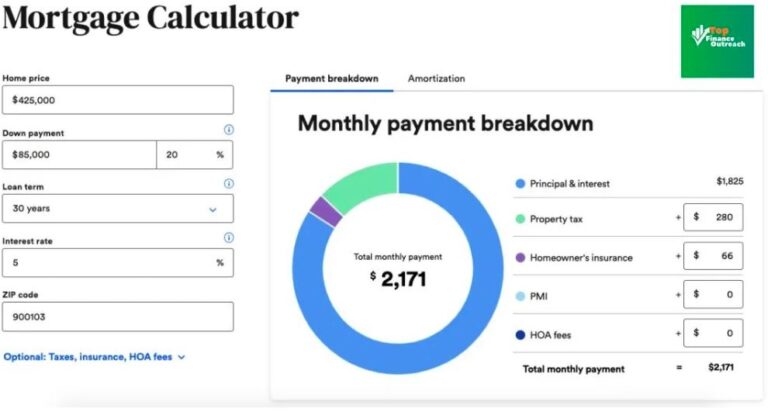
A seller financing calculator uses an amortization formula to estimate your monthly payment based on four core inputs:
- Purchase Price: The agreed sale price of the property.
- Down Payment: The upfront cash the buyer pays. The remaining balance becomes the financed loan amount.
- Interest Rate: The annual rate charged by the seller. Higher than conventional mortgages to compensate for risk.
- Loan Term: How many years the buyer has to repay the loan.
Most calculators also allow for a balloon payment date. A point in time when the remaining loan balance becomes due in full. This is common in seller-financed deals where the seller wants liquidity, or the buyer plans to refinance once their credit improves. Similar to investment planning tools such as our SCHD Dividend Calculator, a seller financing calculator helps project future cash flow and returns.
The Formula Behind the Numbers
The monthly payment is calculated using the mortgage amortization formula: M = P × [r(1+r)ⁿ] ÷ [(1+r)ⁿ. 1] Where M = monthly payment, P = loan principal, r = monthly interest rate and n = total number of payments. The calculator runs this automatically. You just enter the variables.
Key Benefits of Seller Financing (For Buyers and Sellers)
For Buyers
- No bank approval required. Ideal for self-employed individuals or buyers rebuilding credit.
- Faster closings. Deals can close in days, not months.
- Flexible payment terms negotiated directly with the seller.
- No private mortgage insurance (PMI) required, with a small down payment.
- Lower closing costs compared to financing (typically 3–6%).
For Sellers
- Generate monthly income instead of receiving a lump sum.
- Earn income through interest. Often at a higher rate than savings accounts.
- Tax advantages through IRS Section 453 installment sale reporting, spreading capital gains over time.
- Attract a pool of buyers who can’t qualify for traditional financing.
- Potentially sell at a price in exchange for flexible terms.
Many investors consider seller financing one of the most overlooked forms of passive income, alongside other strategies discussed in our guide to 5 Best Passive Income Ideas That Work in 2026.
Seller Financing Calculator: Step-by-Step Example
Let’s say a seller in Texas agrees to finance a property deal with a buyer. Here is how the numbers work:
| Item | Value |
| Property Sale Price | $350,000 |
| Buyer Down Payment | $35,000 (10%) |
| Financed Loan Amount | $315,000 |
| Interest Rate | 7.5% per year |
| Loan Term | 20 years (240 months) |
| Estimated Monthly Payment | ~$2,530/month |
| Total of All Monthly Payments | ~$606,800 |
| Total Interest Earned (Seller) | ~$291,800 |
| Total Amount Received by Seller (Down Payment + Monthly Payments) | ~$641,800 |
In this scenario, the seller collects $292,000 in interest income over 20 years. Income that would not have existed in a traditional cash sale. The buyer, meanwhile, closes the deal without bank involvement. Gets into the property with a manageable monthly payment.
Understanding Balloon Payments in Owner Financing

Owner financing calculator tools include a balloon payment option. This means the loan is amortized over a period (say 30 years), but the full remaining balance becomes due after a shorter term (say 5 or 10 years).
Here is why this matters: as a seller, you get the benefit of monthly payments (calculated on a short-term basis) while limiting your exposure to a multi-decade commitment. As a buyer, it gives you time to build equity and potentially refinance with a lender once your financial profile improves.
According to HonestDeed, when an amortization period is 30 years, but the loan term is only 10 years, the buyer pays based on the 30-year schedule for 10 years and then owes the remaining balance as a balloon payment. Running this through a seller finance calculator before signing protects both parties.
Tax Implications: What Sellers Need to Know
One of the overlooked advantages of seller financing is the tax benefit. Under IRS Section 453, sellers who structure the deal as an installment sale only recognize their capital gain proportionally as payments are received. Not all are once a year in the sale.
This can be an advantage for sellers sitting on high-appreciation properties. By writing a large check to the IRS in year one, the tax burden is spread over the life of the loan. Always consult a tax professional or real estate attorney before structuring your deal, as specific eligibility conditions apply.
Who Should Use a Seller Financing Calculator?
This tool is not just for real estate professionals. Here is who benefits most:
- First-time buyers who don’t qualify for bank mortgages.
- Self-employed individuals with income documentation.
- Real estate investors looking to close off-market deals
- Sellers who want to generate passive income from property they own outright.
- Buyers in non-traditional markets where bank financing is limited.
From Nashville to New South Wales, from Toronto to Manchester. The principles behind seller financing are universal. While legal requirements vary by country and jurisdiction (always verify laws), the math works the same everywhere.
Common Mistakes to Avoid in Seller-Financed Deals

Seller financing can be powerful. Mistakes are costly. Here are the common pitfalls:
- Skipping the promissory note: Every seller-financed deal should be backed by a binding promissory note outlining interest rate, repayment schedule, and default terms.
- Not running an amortization schedule: Always generate a payment schedule before signing. A seller financing calculator gives you this instantly.
- Ignoring on-sale clauses: If the seller still has an existing mortgage on the property, the lender may call the loan due when ownership changes. Consult an attorney before proceeding.
- Setting the interest rate low: Sellers should charge a rate that reflects risk. The IRS also has minimum interest rate rules ( Federal Rate) for installment sales.
- No title search or title insurance: In seller-financed deals, buyers should verify a clear title and consider title insurance for protection.
Asked Questions (FAQs)
What is a seller financing calculator used for?
It is used to estimate mortgage payments, total interest income, and loan amortization schedules for property deals financed directly between buyer and seller. Without involving a bank or mortgage company.
What is a good interest rate for owner financing?
Interest rates on owner-financed deals typically range between 5% and 10%, depending on the buyer’s creditworthiness, the property type, and market conditions. Rates are generally higher than mortgages because the seller assumes the lending risk.
Can seller financing work for real estate?
Yes. While most common in transactions, seller financing can be structured for commercial properties, land contracts, and business acquisitions. The calculator inputs remain the price, down payment, rate, and term.
Is seller financing legal in the UK and Canada?
Yes. Seller financing (often called vendor financing in the UK and Canada) is legal in both countries, though the legal framework differs from US regulations. Always work with a solicitor or real estate lawyer to ensure your agreement is properly structured.
What happens if the buyer defaults on a seller-financed loan?
The seller typically has the right to foreclose or repossess the property, depending on the structure used (mortgage vs. Land contract). The exact process varies by state, province or country. This is why a drafted promissory note and deed of trust are essential from day one.
Conclusion:
A seller financing calculator is more than a math tool. It’s a decision-making engine. It helps sellers understand how much passive income they can generate and helps buyers determine whether the monthly payment fits their budget before committing to any deal.
Whether you are buying or selling a house in the US, or looking into owner financing in Canada, or setting up a vendor finance deal in the UK, the numbers are clear. Seller financing remains one of the most flexible alternatives to traditional mortgage lending. By allowing buyers and sellers to negotiate terms directly, it can create opportunities that may not be available through conventional financing channels.