What Is Line 15000 on Tax Return? positive guide in 2026
If you have ever looked at your T1 General tax form and wondered what line 15000 on the tax return is, you are not alone. A lot of people ask this question every year when they file their taxes. This one line is very important because it determines how much tax you owe, what benefits you can get, and whether your bank will give you a mortgage.
In terms of line 15000 on your tax return is the total amount of money you made from all sources before any deductions are taken out. It is very important to understand this so you can file your taxes accurately, get all the benefits you are eligible for, and avoid any problems with the CRA.
This guide will cover everything you need to know about line 15000 on tax return. We will talk about what it’s how to find it, what happens if it is wrong, and why it is important. Understanding your income is important not only for taxes but also for making smart financial decisions, such as learning how to start investing
What is Line 15000 on a tax return? The Official Definition
Line 15000 is the line on your CRA T1 General tax return that shows your income, also called gross income, for the whole tax year. It used to be called Line 150. The CRA changed the tax return format and added more lines for different types of income. Investment income, such as dividends and interest, is included in Line 15000. If you earn dividend income.
You may find our SCHD dividend calculator useful for estimating returns. Line 15000 on a Canadian tax return represents your total income from all taxable sources before deductions are applied. It is one of the most important figures on your tax return because it provides a complete overview of the income you earned during the tax year.
This amount is calculated by adding together income from employment, self-employment, pensions, investments, rental properties, and other taxable sources. The Canada Revenue Agency (CRA) uses Line 15000 to assess your financial situation and determine your eligibility for various tax credits, benefits, and government assistance programs. Since it reflects your total income before deductions, it serves as a key indicator of your overall earnings.
Understanding the difference between Line 15000 and net income is also essential. While Line 15000 shows your total income before deductions, net income is calculated after eligible deductions such as RRSP contributions, childcare expenses, and certain employment-related expenses have been subtracted. This means your net income will generally be lower than your total income reported on Line 15000.
Here is something you need to know:
- Line 15000 is your gross income before deductions.
- Line 23600 is your income after deductions like RRSP, union dues and childcare.
- Line 26000 is your income after more adjustments.
- Line 15000 is always the starting point. It is used to calculate all the numbers on your tax return.
What Income Is Included in Line 15000?
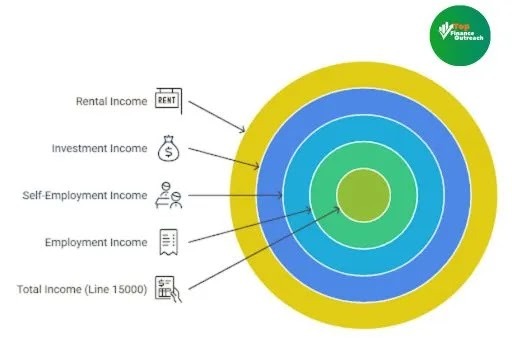
Many different types of income are included in your line 15000 total. Each type of income is entered on its line, and then all those lines are added up to get your Line 15000 figure. You do not enter Line 15000 yourself. Your tax software or the CRA calculates it for you.
For example, if you have a job, your employment income is included. This includes your salary, wages, bonuses, vacation pay and taxable benefits that your employer reports on your T4 slip.
If you are self-employed or have a business, your net business income is included. This is your revenue minus your eligible business expenses.
Investment and pension income are also included. This includes interest earned on bank accounts or bonds, dividends from stocks, capital gains, RRSP withdrawals and pension payments.
Government benefits and other income are included, too. This includes Employment Insurance, Old Age Security, certain government support payments, scholarships, bursaries, alimony and rental income.
Why Line 15000 Matters Beyond Just Filing Taxes
Line 15000 is not just important for filing your taxes. It is used in other areas of your financial life. For example, the CRA uses your Line 15000 figure to determine if you are eligible for benefits like the Canada Child Benefit or the GST/HST Credit.
Banks and lenders also use Line 15000 to verify your income when you apply for a mortgage or loan. If you are refinancing, buying a home or applying for student aid, this number is very important.
Even family courts use Line 15000 to calculate child and spousal support payments. So it is very important to get this number right. Banks often review Line 15000 when assessing mortgage applications. Building high income is also an important part of how to build wealth in your 30s.
Another important aspect of Line 15000 is its role in income verification. Many organizations rely on this figure because it provides a standardized measure of an individual’s earnings. Whether you are applying for student financial aid, seeking a business loan, or completing government paperwork, Line 15000 is often requested as evidence of your financial status. Since it reflects total income before deductions, it offers a broad overview of your earning capacity.
Line 15000 may also influence tax planning strategies. Individuals who expect their income to increase may consider making contributions to registered savings plans or taking advantage of eligible deductions to reduce their taxable income. Understanding how total income is calculated can help taxpayers make informed decisions that may improve their financial position and reduce their overall tax burden.
When reviewing a Notice of Assessment, taxpayers should compare the figures reported on their return with the amounts accepted by the Canada Revenue Agency. Any discrepancies involving Line 15000 should be addressed promptly to avoid complications. Keeping copies of tax slips, receipts, and supporting documents can make it easier to resolve questions or concerns related to reported income.
It is also worth noting that Line 15000 alone does not determine how much tax you owe. While it represents your total income, various deductions, credits, and adjustments are applied later in the tax calculation process. Therefore, a high Line 15000 amount does not necessarily mean a taxpayer will face a proportionally high tax bill, as other factors can affect the final result.
As tax laws and benefit programs change over time, taxpayers should stay informed about how income is reported and used. Understanding the purpose of Line 15000 can help individuals file more accurate tax returns, maximize available benefits, and make better financial decisions throughout the year. By knowing what this line represents and why it matters, taxpayers can approach tax season with greater confidence and clarity.
What Is Line 15000 on Tax Return? This is a common question among Canadian taxpayers who want to better understand their tax returns. Line 15000 represents your total income from all taxable sources before deductions are applied. Knowing What Is Line 15000 on Tax Return can help you understand how the Canada Revenue Agency calculates eligibility for benefits, credits, and other income-based programs.
When people ask, “What Is Line 15000 on Tax Return?” they are usually trying to determine how their income affects taxes and government benefits. The amount reported on Line 15000 includes employment income, self-employment income, pension income, investment earnings, rental income, and other taxable amounts received during the year.
Understanding What Is Line 15000 on Tax Return is important because this figure is often used as proof of income. Banks, lenders, and landlords may request your Line 15000 amount when reviewing applications for mortgages, loans, or rental properties. As a result, knowing What Is Line 15000 on Tax Return can be valuable for both tax and financial planning purposes.
Another reason taxpayers search for What Is Line 15000 on Tax Return is that many federal and provincial benefit programs rely on this income figure. Programs may use Line 15000 to determine eligibility and calculate benefit amounts. This makes it essential to report your income accurately and review your tax return carefully before filing.
If you are still wondering What Is Line 15000 on Tax Return, it is helpful to remember that it reflects your total income before deductions. It is not the same as net income or taxable income. Understanding What Is Line 15000 on Tax Return can help you interpret your tax documents more effectively and make informed financial decisions throughout the year.
Learning What Is Line 15000 on Tax Return can also help you prepare for future tax seasons. By reviewing your income sources and understanding how they contribute to Line 15000, you can maintain accurate records and avoid errors that could lead to reassessments or delays in processing your return.
In summary, What Is Line 15000 on Tax Return is a question every Canadian taxpayer should understand. Line 15000 provides a snapshot of your total annual income and plays an important role in tax calculations, income verification, government benefits, and overall financial planning.
Where to Find Line 15000 on Tax Return
You can find your Line 15000 figure in places:
- On your T1 General Tax Return, near the bottom of the income section.
- On your CRA Notice of Assessment, which is mailed or sent digitally after the CRA processes your return.
- In your CRA My Account under the ‘Tax Returns’ section.
- In your tax filing software, on the summary screen.
Common Line 15000 Mistakes. How to Avoid Them

Even small mistakes on this line can cause problems like delayed refunds or CRA reassessments. Here are some common mistakes and how to avoid them:
- Forgetting to include freelance or side income.
- Not reporting investment income from T5 slips.
- Reporting rental income instead of gross rental income.
- Not reporting income.
- Confusing Line 15000 with Line 23600.
If you find a mistake after filing, do not panic. You can log in to CRA My Account. Fix it. Line 15000 in 2026. What Has Changed
Tax rules change every year. For the 2025-2026 filing cycle, there are updates:
- The Basic Personal Amount has increased, which reduces the amount of income to federal tax.
- The RRSP Contribution Limit has increased, which can reduce your income.
- The Canada Dental Benefit and Grocery Rebate are programs that use Line 15000 to determine eligibility.
- The CRA has rules for reporting foreign property.
Line 15000 in 2026: What Has Changed

Tax rules evolve every year. For the 2025 to 2026 filing cycle, a few updates are worth noting:
• Basic Personal Amount: Increased to approximately $15,705, which reduces the amount of your income subject to federal tax, but does not change what you report on Line 15000.
• RRSP Contribution Limit: Now at approximately $32,490 , contributions reduce your net income (Line 23600) but not Line 15000.
• Canada Dental Benefit and Grocery Rebate: Eligibility for both programs is assessed based on your Line 15000 income from the prior year.
• Stricter Foreign Property Reporting: The CRA has tightened disclosure requirements for foreign income and property ownership. Understanding your income early can help you qualify for benefits and develop better money habits. Learn more about how to build wealth in your 20s.
Many taxpayers ask, “What Is Line 15000 on Tax Return?” because this figure plays a crucial role in determining eligibility for government benefits and tax credits. Understanding What Is Line 15000 on Tax Return can help you better interpret your tax return and gain a clearer picture of your overall financial situation. Since this line reflects total income before deductions, it is often used as a benchmark for various financial assessments.
If you are wondering, “What Is Line 15000 on Tax Return?” it is important to know that the amount includes income from several sources. Employment income, self-employment earnings, pension payments, investment income, and rental income can all contribute to the total reported on this line. Knowing What Is Line 15000 on Tax Return can help ensure that you accurately report your income and avoid potential issues with your tax filing.
Another reason people search for “What Is Line 15000 on Tax Return?” is that lenders and financial institutions frequently use this figure when reviewing applications. Whether you are applying for a mortgage, a personal loan, or a rental property, your Line 15000 amount may be requested as proof of income. Understanding What Is Line 15000 on Tax Return can therefore be beneficial when preparing important financial documents.
When learning What Is Line 15000 on Tax Return, it is also helpful to understand how it differs from net income. While Line 15000 reports your total income before deductions, net income is calculated after eligible deductions have been subtracted. This distinction is important because many tax calculations and benefit programs use different income figures depending on their requirements.
Taxpayers who understand What Is Line 15000 on Tax Return are often better prepared to manage their finances and plan for future tax obligations. By reviewing this amount each year, you can track changes in your income, evaluate your financial progress, and make informed decisions about savings, investments, and tax planning strategies.
Frequently Asked Questions
Is Line 15000 the same as my income?
No Line 15000 is your total gross income before deductions. Taxable income is calculated later, after deductions and adjustments.
Does Line 15000 affect my tax refund?
Yes, indirectly. Line 15000 is used to calculate your income and taxable income, which determines your final tax payable.
Where do I find Line 15000 on my tax return?
It is near the bottom of the income section on your T1 form. You can also find it on your CRA Notice of Assessment or in your tax filing software.
Is EI or CERB included in Line 15000?
Yes, these are government income and must be included.
Q5: Can I change Line 15000 after filing my tax return?
Yes, you can log in to CRA My Account. Use the “Change My Return” feature.
Understanding what Line 15000 on tax return is is very important. It is the foundation of your tax file. If you get it right, your benefits, loan applications, and tax calculations will all be correct. If you get it wrong, you may face delays, missed payments or unexpected CRA correspondence.
Conclusion
Understanding what is line 15000 on tax return is not just a box-ticking exercise. It is the foundation of your entire tax file. Get it right, and your benefits, loan applications, and tax calculations all fall into place. Get it wrong, and you may face delays, missed payments, or unexpected CRA correspondence. Line 15000 is your gross total income from all sources before deductions. It was formerly Line 150. You find it on your T1 General, your Notice of Assessment, or through CRA My Account. And every income source, employment, self-employment, investment, government benefits, and rental flows into it.Take the time this tax season to double-check every income slip you receive. Match it to what the CRA already has in My Account. File accurately, file on time, and let every line on your return starting with Line 15000 work in your favour. This guide will cover everything you need to know about line 15000 on tax return. This guide will cover everything you need to know about line 15000 on tax return